YOON Nak-joon (4th Dan) is the Dojocho of Aikido Ansan dojo and serves as the President of KAU and SUNG Ju-hwan (5th Dan) is the Dojocho of Aikido Samsungdang and serves as the Vice President and Technical Director of KAU.
Simple training exercise using an ojami beanbag to check your body axis and unnecessary tension. Compare the same movement with and without the ojami and notice how your movement changes. お手玉を使って、身体の軸や余計な力みを確認するための簡単な稽古です。お手玉を使わずに動く場合と、乗せて動く場合の違いを比べてみてください。
September 2026 Workshop Theme and Program ※ Theme: Kokyu-nageBreath Throwing / 呼吸投げ Kokyu-nage is not a single fixed technique. Rather, it appears in various forms when the principles of basic kata are working properly. At Samsungdang, regular classes are centered on basic kata. In this workshop, we will practice several forms of kokyu-nage that emerge from basic waza and tai-sabaki, and examine through the body how kokyu-nage takes shape. The focus will not be on deep theore
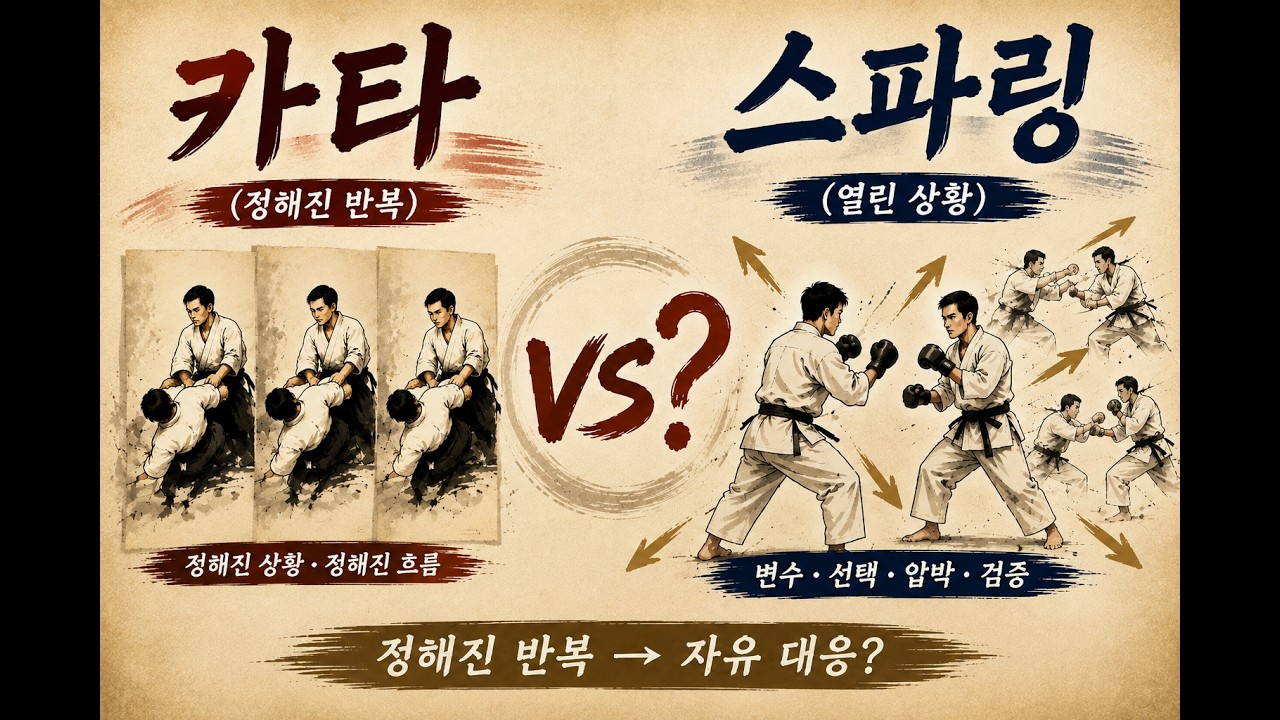
A viewer with a judo background recently left an interesting question on my previous video about kata. As it happened, I was already preparing a video on the same subject. Kata repeats predetermined attacks and responses. Does that make it less effective than sparring or free practice when it comes to adapting to changing situations? And how should Aikido approach that issue? This video begins with that question. By limiting variables, kata allows us to repeatedly examine pri
Simple training exercise using an ojami beanbag to check your body axis and unnecessary tension. Compare the same movement with and without the ojami and notice how your movement changes. お手玉を使って、身体の軸や余計な力みを確認するための簡単な稽古です。お手玉を使わずに動く場合と、乗せて動く場合の違いを比べてみてください。
September 2026 Workshop Theme and Program ※ Theme: Kokyu-nageBreath Throwing / 呼吸投げ Kokyu-nage is not a single fixed technique. Rather, it appears in various forms when the principles of basic kata are working properly. At Samsungdang, regular classes are centered on basic kata. In this workshop, we will practice several forms of kokyu-nage that emerge from basic waza and tai-sabaki, and examine through the body how kokyu-nage takes shape. The focus will not be on deep theore
A viewer with a judo background recently left an interesting question on my previous video about kata. As it happened, I was already preparing a video on the same subject. Kata repeats predetermined attacks and responses. Does that make it less effective than sparring or free practice when it comes to adapting to changing situations? And how should Aikido approach that issue? This video begins with that question. By limiting variables, kata allows us to repeatedly examine pri