September 2026 Workshop Theme and Program ※ Theme: Kokyu-nageBreath Throwing / 呼吸投げ Kokyu-nage is not a single fixed technique. Rather, it appears in various forms when the principles of basic kata are working properly. At Samsungdang, regular classes are centered on basic kata. In this workshop, we will practice several forms of kokyu-nage that emerge from basic waza and tai-sabaki, and examine through the body how kokyu-nage takes shape. The focus will not be on deep theore
[Samsungdang Monthly Workshop] Linking Jojutsu and Taijutsu This workshop will examine how maai, timing, and counters in jojutsu connect to taijutsu. 1. Schedule Date: Saturday, June 13, 2026 Time: 1:00-3:30 PM Venue: Aikido Samsungdang, Incheon Instructor: Sung Ju-hwan, Dojo-cho 5th Dan, Aikikai 2. Participants Open to participants regardless of affiliation. Both Aikido practitioners and non-Aikido practitioners are welcome. 3. Training Content Session 1 1:00-2:1
Today, I conducted a special lecture for 3rd-year Hapkido majors at my alma mater, the Korea National Police University (KNPU). It was the inaugural session of the "Inter-Martial Arts Exchange Lecture" series, hosted at the invitation of Professor Shin. There is a 29-year seniority gap between my juniors and me. Coincidentally, I began my Aikido journey during my 3rd year of university, making my years of training exactly equal to the gap in our class years. Beyond mere coinc
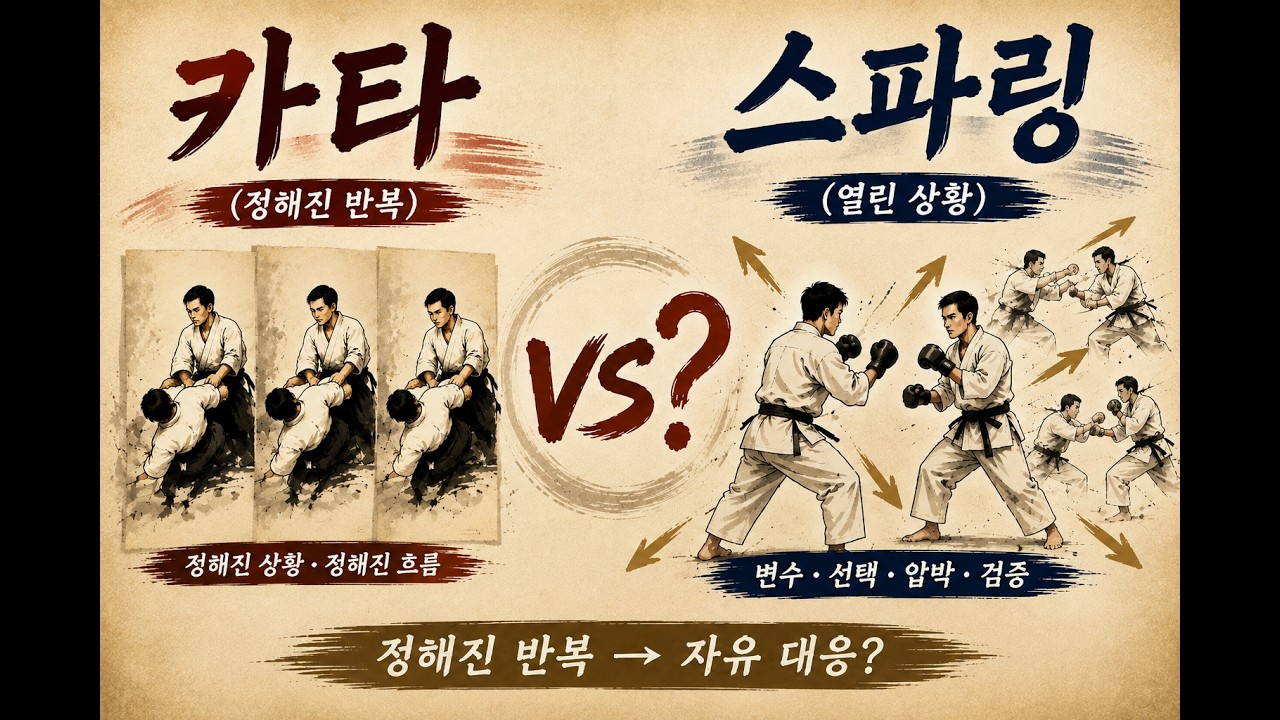
A viewer with a judo background recently left an interesting question on my previous video about kata. As it happened, I was already preparing a video on the same subject. Kata repeats predetermined attacks and responses. Does that make it less effective than sparring or free practice when it comes to adapting to changing situations? And how should Aikido approach that issue? This video begins with that question. By limiting variables, kata allows us to repeatedly examine pri
Whenever I publish videos about Aikido, several questions come up repeatedly. Why are the attack and response decided in advance? Why does uke repeat the same attack and ukemi? And is uke simply cooperating to make the technique work? These are natural questions for anyone seeing Aikido training for the first time. This video addresses those questions by examining the learning structure of kata and the role of uke. In Aikido training, the attack and response are predetermined
In this video presented by Aikido Samsungdang, we explain four fundamental Aikido jo kata—Roku no Jo, Hachi no Jo, Ju-san no Jo, and Sanju-ichi no Jo—along with the use of the lower body in jo practice. Ju-san no Jo and Sanju-ichi no Jo are kata organized by the late Morihiro Saito Sensei based on the jo techniques of O-Sensei Morihei Ueshiba. One of their defining features is that each movement corresponds clearly to a specific count. Roku no Jo consists of movements 12 thro